English| EUR
Suggested for you
More currencies
Choose a language
No railway line crosses into the principality's capital, which is why the question of how to get to liechtenstein from zurich has more than one honest answer. Trains run east through the Rhine valley, buses finish the job, and organised coaches skip the changeovers entirely. This page sets out what each approach actually involves before you commit to a morning.
Quick answer
There is no direct train to Vaduz. Reaching Liechtenstein, 9490 Vaduz from Zurich means a rail leg east through the Rhine valley followed by a regional bus, or a coach tour that runs door to door. Entry to the country costs 0 CHF, roads and public transport are open 00:00–23:59 daily, and the practical arrival window is 08:00–17:00.
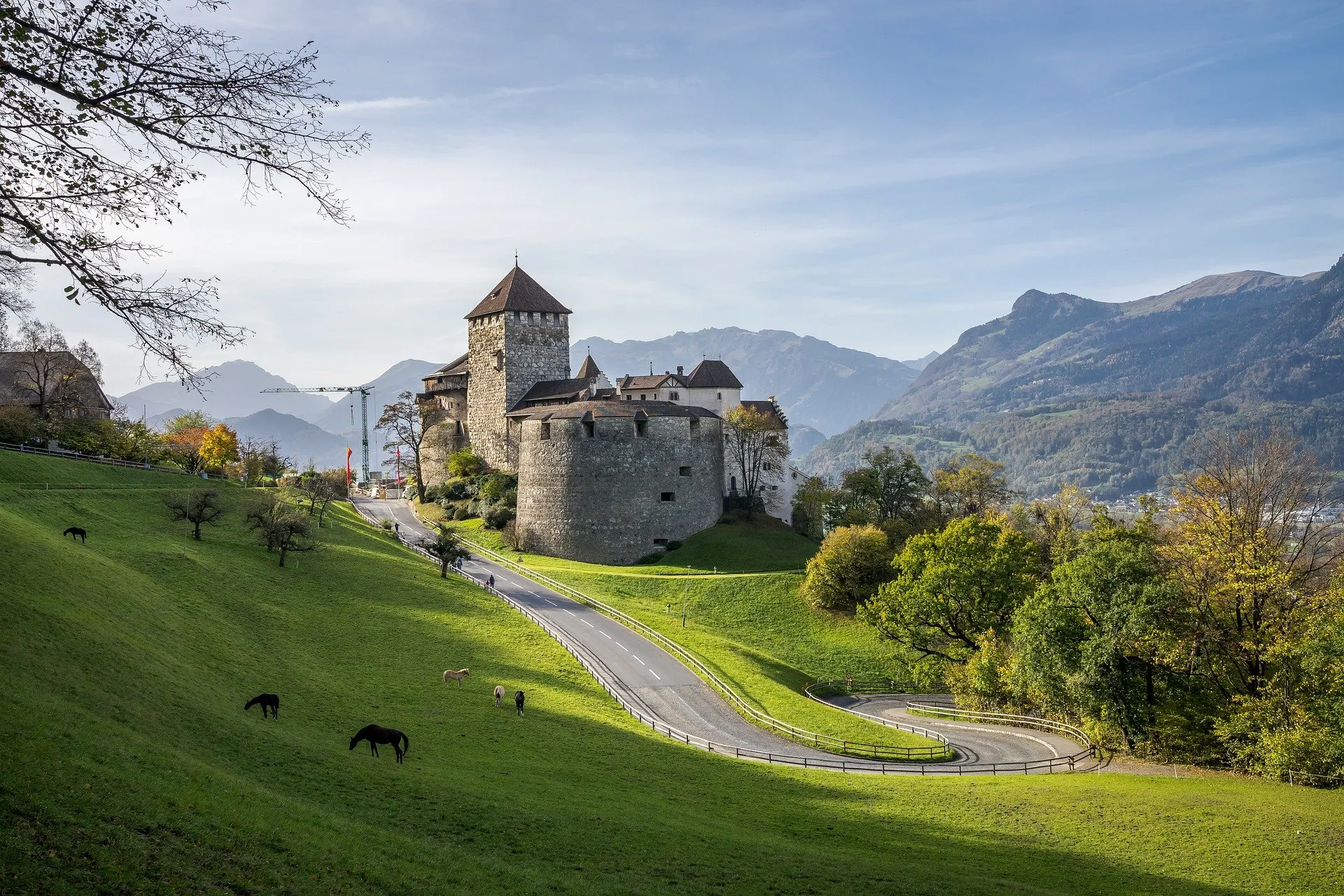
Liechtenstein is one of only two doubly landlocked countries on earth, and it has no international airport, no motorway of its own and no passenger railway station in its capital. The Austrian-operated line that clips the northern edge of the principality bypasses Vaduz altogether. That single geographic quirk explains almost everything about how to get to liechtenstein from zurich: the last stretch is never by train, and every route converges on the same handful of Rhine valley transfer points before a bus finishes the journey. What the reader is dealing with, then, is a two-part trip rather than a single ticket. Swiss rail carries travellers east along the Walensee shoreline and through the Heidiland region toward Sargans or Buchs SG; from either, the Liechtenstein Bus network — the yellow LIEmobil fleet — runs into Vaduz and on through Schaan, Triesenberg and Malbun. Drivers face the same funnel, joining the A13 motorway and crossing one of the Rhine bridges into the principality. Neither approach involves a border formality in the ordinary sense: Liechtenstein sits inside the Swiss customs and currency union, the Swiss franc is legal tender, and there is no entrance fee to the country at 0 CHF. Passports still matter for the souvenir stamp available at the Vaduz tourist office on Städtle, which is a different matter entirely. The practical decision is therefore not about the route — the corridor is fixed — but about who manages the connections. Independent travellers gain flexibility and the option to continue toward Malbun or the Eschnerberg trail; a guided Vaduz excursion trades that flexibility for a single vehicle and a fixed return. Both land visitors in the same square below Vaduz Castle, the princely residence that is closed to the public but visible from the vineyard path above town. Anyone weighing how to get to liechtenstein from zurich should settle the connection question first and the sightseeing order second. The dedicated sections below break out timetables, the direct comparison between transit and organised day tours, hours and costs. For confirmation of anything time-sensitive, Liechtenstein Marketing publishes current details at tourismus.li and can be reached on +4232396363.
“The corridor is fixed; the only real decision is who manages the connections.”
Liechtenstein is located east of Zurich, accessible via a combination of Swiss federal rail services and regional bus connections or by driving along the A3 and A13 motorways. The journey typically concludes in the capital, Vaduz, situated at Liechtenstein, 9490 Vaduz.
Zurich HB to Sargans or Buchs SG, then LIEmobil bus 11/12/13 to Vaduz Post
A3 towards Chur, then A13 towards St. Margrethen, exit at Vaduz
For the most efficient travel, plan your journey within the best arrival window of 08:00–17:00. If arriving by car, utilize designated public parking areas in Vaduz, as the city center is pedestrian-friendly.
Choosing between an organized day tour and independent public transport determines how you navigate the route from Zurich to Vaduz. Each method offers a distinct balance of convenience and autonomy for your visit to Liechtenstein.
| Organized Day Tour Scheduled Transit | Independent Transit Public Train and Bus | |
|---|---|---|
| Flexibility | Fixed schedule and itinerary | Self-directed planning |
| Logistics Difficulty | Low: transport managed by operator | High: requires transfers and navigation |
| Cost Efficiency | All-inclusive base fee | Variable individual ticket costs |
| Guided Insight | Live commentary and historical context | Self-guided exploration |
| Transit Speed | Direct routing to landmarks | Subject to public connection intervals |
Verdict: Select an organized tour for simplified logistics and historical narrative, or choose independent transit for maximum flexibility in your arrival and departure schedule within the 08:00–17:00 window.
This plan suits independent travellers pairing the Heidiland region with a first look at Vaduz in a single day, landing inside the 08:00–17:00 arrival window. Allow roughly nine hours door to door from Zurich, with about four of them on the ground.
Depart the city early so the Heidiland leg starts before mid-morning. Keep bags light — the day involves several changes and short walks between stops.
Stroll the spa park and the old village lanes around Dorfplatz, roughly 45 minutes. Cafés open early here, which makes it a sensible coffee stop before the valley climb.
Choose one: the Tamina Gorge walkway above Bad Ragaz, or the vineyard paths and Heididorf at Maienfeld. Each takes about 90 minutes including the approach; doing both compresses Vaduz too much.
Eat in Maienfeld or Sargans rather than waiting for Vaduz, where midday tables fill quickly. Budget 45 minutes and keep an eye on the clock.
Start on Städtle, the pedestrian main street running past the Rathaus and the tourist information point at 9490 Vaduz. Fifteen minutes orients you to the whole compact centre.
The Kunstmuseum Liechtenstein and the Liechtensteinisches LandesMuseum sit within two minutes of each other on Städtle. One museum properly beats two rushed — allow 60 to 75 minutes.
The marked footpath from the centre climbs about 20 minutes to the castle terrace. The interior is the prince's residence and closed to visitors, so the draw is the valley view.
Pass St. Florin Cathedral and the Regierungsgebäude on the way down, then begin the return leg. Confirm your connection before the last stretch of the walk.
The best arrival window for traveling from Zurich to Liechtenstein is 08:00–17:00, which aligns with public transport schedules and visitor center operations. Arriving within this timeframe ensures reliable connections for both train and bus transfers.
—
Early departures from Zurich avoid peak commuter hours and offer the most consistent transit schedules.
Mild, 12°C to 20°C
Spring offers stable transit conditions and clear visibility for regional travel.
Cool, 8°C to 16°C
Autumn provides clear weather, ideal for maintaining consistent arrival times during cross-border transit.
Verdict: The optimal period for travel is Tuesday to Thursday between 08:00 and 17:00, particularly during the months of May, June, September, or October.
Liechtenstein is accessible to visitors daily throughout the week, with full access provided to public areas and road networks.
Access to Liechtenstein as a destination is provided through public infrastructure, meaning there are no entry tickets required for visitors. Travelers arriving from Zurich encounter no gate fees upon arrival in Vaduz.
Verdict: The official entrance fee for Liechtenstein is 0 CHF, as the destination operates as an open public space.
Everything you need to know about how to get to liechtenstein from zurich
To travel by train, you typically depart from Zurich HB toward Sargans, followed by a connecting bus to Vaduz. The route utilizes the efficient Swiss Federal Railways network combined with local Liechtenstein bus services.
Organized tours offer a streamlined experience with direct transfers, which simplifies the logistics of how to get to Liechtenstein from Zurich. Independent travel provides more flexibility but requires navigating multiple regional transit connections.
The best arrival window is 08:00–17:00, which aligns with optimal timing for train and bus transfers. Arriving during this period also ensures that the visitor center and local services are fully operational.
Yes, the public transport network is well-integrated and accessible throughout the country. You can easily navigate between major landmarks using the local bus system after your initial arrival.
There is 0 CHF entry fee for public transport and road access to the country. While specific museums or attractions may charge for admission, the general arrival process is free.
Yes, many travelers incorporate a stop in the Heidiland region while researching how to get to Liechtenstein from Zurich. It is conveniently located along the primary rail corridor between the two destinations.
The most efficient method depends on your preference for convenience versus independence. Most visitors find that combining rail travel with local buses provides a reliable link between the two locations.